
-20%

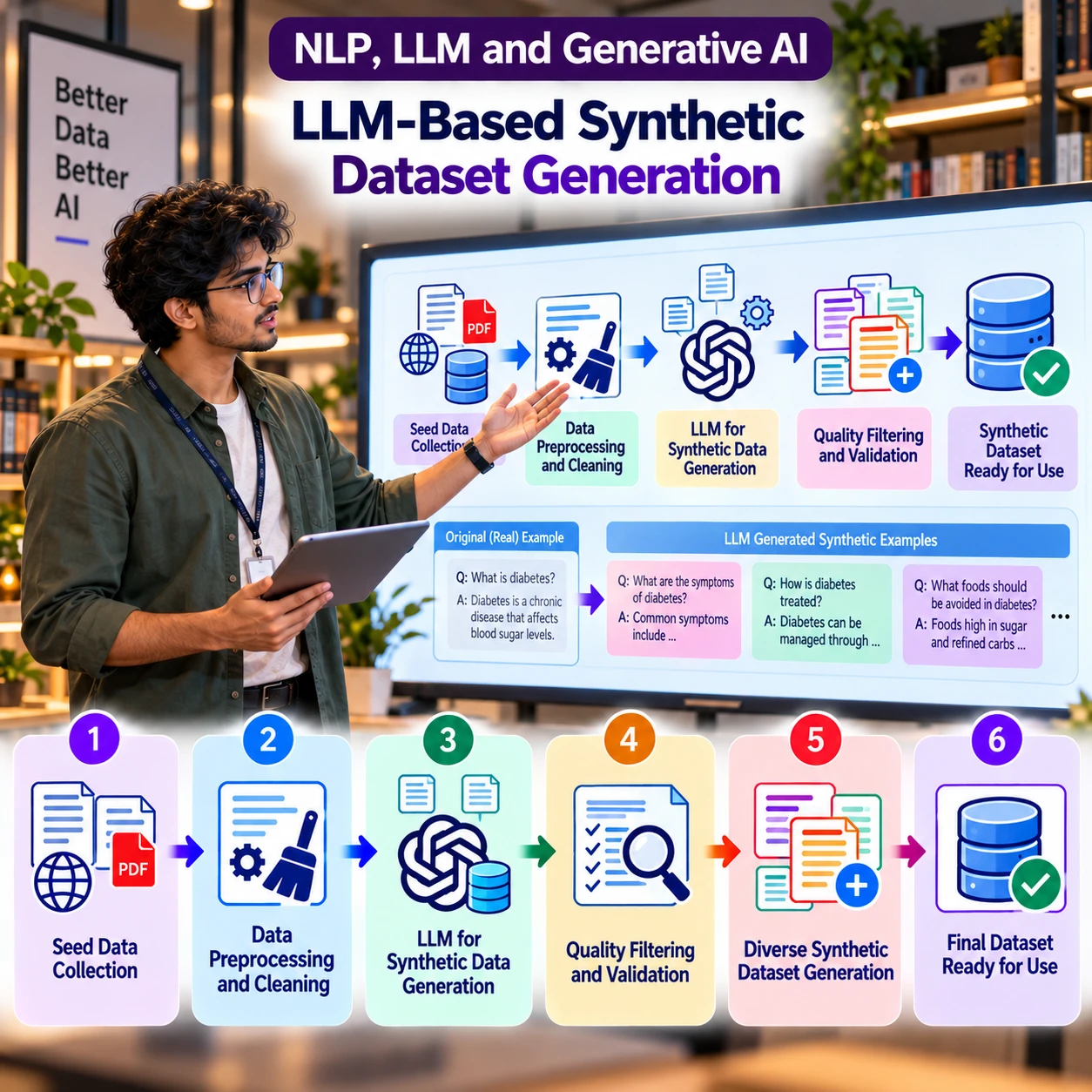
LLM-Based Synthetic Dataset Generation

0 Orders 0 Wish listed

₹4,999.00

Qty
Total price:
  ₹4,999.00

Detail Description

1. Abstract

The LLM-Based Synthetic Dataset Generation system is a Generative AI application designed to create artificial datasets using Large Language Models (LLMs). It generates structured and unstructured data based on user-defined requirements, including data types, sample size, categories, and output formats. The system can produce synthetic customer records, question-answer pairs, text classification samples, product reviews, and domain-specific training examples. By using prompt engineering and configurable generation parameters, the application creates diverse data samples for AI model training, software testing, and research. It also includes data validation, duplicate detection, and export functionality to improve dataset usability. The system aims to reduce dependence on manually collected data while supporting privacy-conscious experimentation. Generated data must be validated for accuracy, diversity, and potential privacy leakage before being used in real-world applications.

2. Objectives

  1. To develop an AI-based system for generating synthetic datasets.
  2. To generate structured and unstructured data using LLMs.
  3. To support configurable dataset size, format, and domain.
  4. To create synthetic data for machine learning and NLP tasks.
  5. To generate question-answer pairs and text classification samples.
  6. To validate generated records against predefined schemas.
  7. To detect duplicate, incomplete, and inconsistent samples.
  8. To export datasets in CSV, JSON, and other supported formats.
  9. To evaluate data quality, diversity, and usefulness for downstream tasks.

3. Existing System

Traditional dataset preparation depends on manual data collection, surveys, public datasets, web scraping, and rule-based data generation. These approaches can be time-consuming, expensive, or limited in diversity. Real-world datasets may also contain sensitive personal information or lack sufficient examples for rare categories. Conventional synthetic data tools often rely on fixed templates and predefined rules, limiting their ability to generate varied natural-language samples.

Disadvantages

  1. Manual dataset creation requires considerable time and effort.
  2. Public datasets may not match specific project requirements.
  3. Rare classes and specialized examples may be underrepresented.
  4. Rule-based generation can produce repetitive records.
  5. Collecting real data may introduce privacy and compliance concerns.
  6. Data cleaning and formatting require additional effort.

4. Proposed System

The proposed system uses an LLM to generate synthetic records according to user-defined instructions. Users select a domain, data type, number of samples, output format, and optional constraints. The application builds generation prompts, requests data from the selected model, parses the output, and validates it against the required structure.

The system can generate tabular records, conversational datasets, classification examples, and instruction-tuning samples. Validation modules check required fields, data types, duplicates, and basic consistency rules. Users can preview generated records, regenerate invalid samples, and export the final dataset for further processing.

Key Features

  1. LLM-based synthetic data generation.
  2. Configurable domain and sample count.
  3. Structured data generation using schemas.
  4. Text, classification, and question-answer dataset generation.
  5. CSV and JSON export.
  6. Duplicate and missing-value detection.
  7. Schema validation and quality checks.
  8. Prompt customization.
  9. Dataset preview and regeneration.
  10. Optional quality reports and privacy-risk checks.

5. Implementation Procedure

1. Define the use case: Select a dataset type, such as customer support conversations, product reviews, educational question-answer pairs, or tabular records.

2. Design the user interface: Create fields for domain, sample count, data format, language, and generation constraints.

3. Integrate an LLM: Connect to a compatible hosted LLM API or a locally deployed model.

4. Create generation prompts: Instruct the model to produce diverse, realistic examples in a specified structure without including unnecessary explanations.

5. Define the output schema: Specify required fields, allowed categories, data types, and validation rules.

6. Generate synthetic records: Request data in manageable batches and handle incomplete or malformed responses.

7. Parse the output: Convert the generated content into structured records using JSON parsing or appropriate data-processing libraries.

8. Validate data quality: Check missing fields, invalid values, duplicate records, formatting errors, and consistency with the selected schema.

9. Improve dataset diversity: Use varied prompts, category constraints, and controlled regeneration to reduce repetitive examples.

10. Evaluate synthetic data: Assess validity, diversity, distribution similarity where applicable, and usefulness on a downstream model-training task.

11. Export the dataset: Provide CSV and JSON downloads, with optional reports summarizing record counts and validation results.

12. Test and deploy: Test different domains and dataset sizes, manage API failures, protect credentials, and avoid generating or retaining sensitive personal data unnecessarily.

6. Software Requirements

ComponentRequirements
Programming LanguagePython 3.10+ or compatible version
Development EnvironmentVS Code, PyCharm, or Jupyter Notebook
AI ModelHosted LLM API or local language model
LLM IntegrationProvider SDK, LangChain, or compatible library
Data ProcessingPandas and NumPy
Schema ValidationPydantic or JSON Schema
NLP LibrariesHugging Face Transformers, optionally
BackendFlask or FastAPI
User InterfaceStreamlit or React.js
Data StorageCSV, JSON, or SQLite
Evaluationscikit-learn and custom data-quality metrics
Operating SystemWindows or Linux
InternetRequired for hosted model APIs

7. Hardware Requirements

ComponentMinimum / Suggested Configuration
ProcessorIntel Core i5 or equivalent
RAM8 GB minimum; 16 GB recommended
Storage10–20 GB free space, depending on dataset size
GPUOptional when using hosted LLM APIs
GPU MemoryDepends on the size of any locally hosted model
InternetRequired for cloud-based model access

Note: Hardware requirements vary with model size, dataset volume, and generation settings. Using a hosted LLM API generally reduces local hardware requirements.

8. Advantages of the Project

  1. Faster data preparation: Generates samples without manually writing every record.
  2. Customizable output: Adapts data to specific domains and project requirements.
  3. Flexible formats: Supports structured records and natural-language examples.
  4. Scalable generation: Can generate large datasets through batch processing.
  5. Improved coverage: Helps create additional examples for underrepresented categories.
  6. Automated validation: Identifies malformed or incomplete records.
  7. Privacy-conscious experimentation: Can reduce reliance on real personal data when properly designed.
  8. Reusable datasets: Supports testing, prototyping, and model development.
  9. Easy integration: Generated datasets can be exported for machine learning and NLP pipelines.
  10. Quality evaluation: Enables assessment of diversity and downstream usefulness.


No review given yet!

Fast Delivery all across the country
Safe Payment
7 Days Return Policy
100% Authentic Products

You may also like

View all

LLM Safety, Toxicity and Prompt-Injection Detection

₹4,999.00

Long-Document Information Extraction using LLMs

₹4,999.00

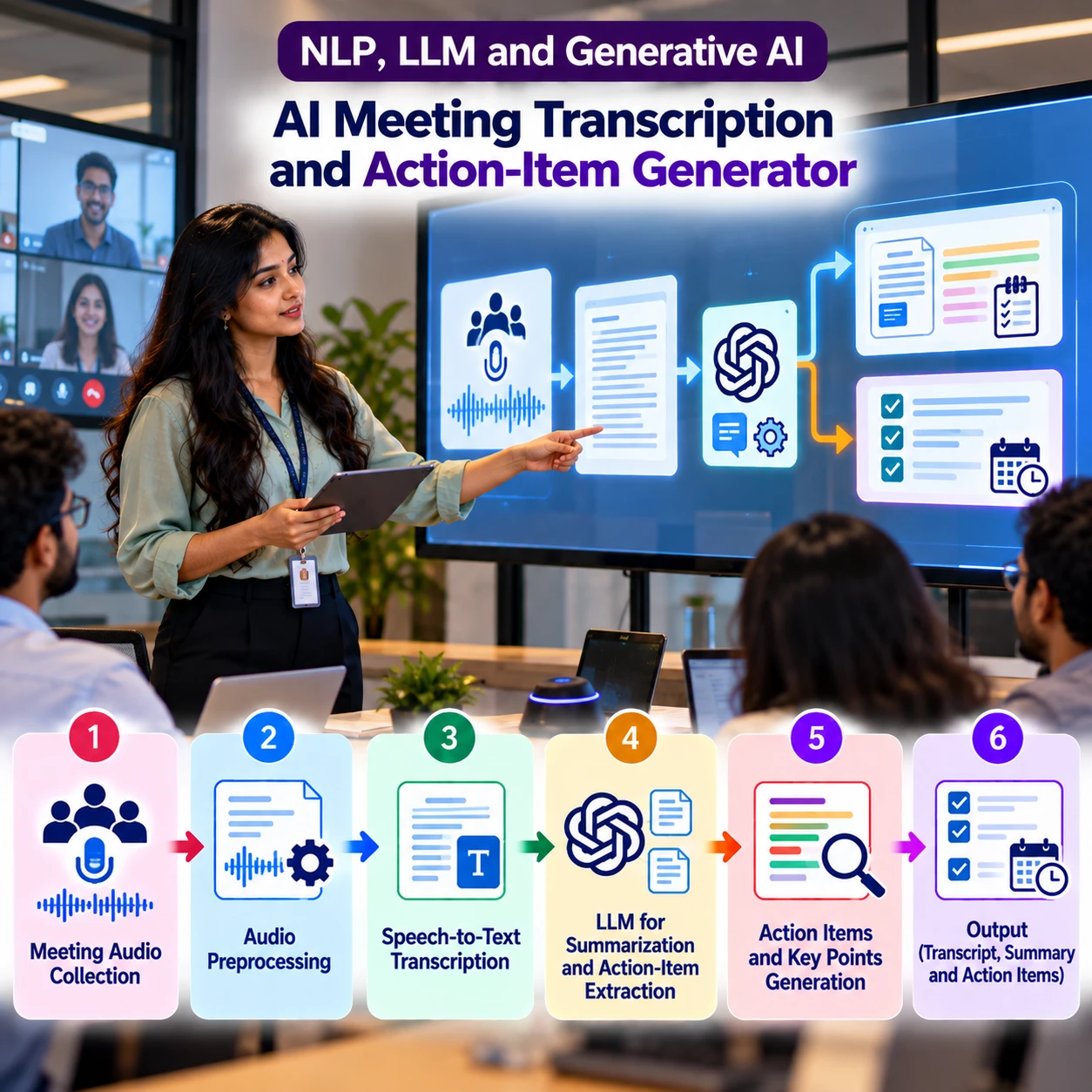
AI Meeting Transcription and Action-Item Generator

₹4,999.00

Explainable Automatic Essay Evaluation

₹4,999.00

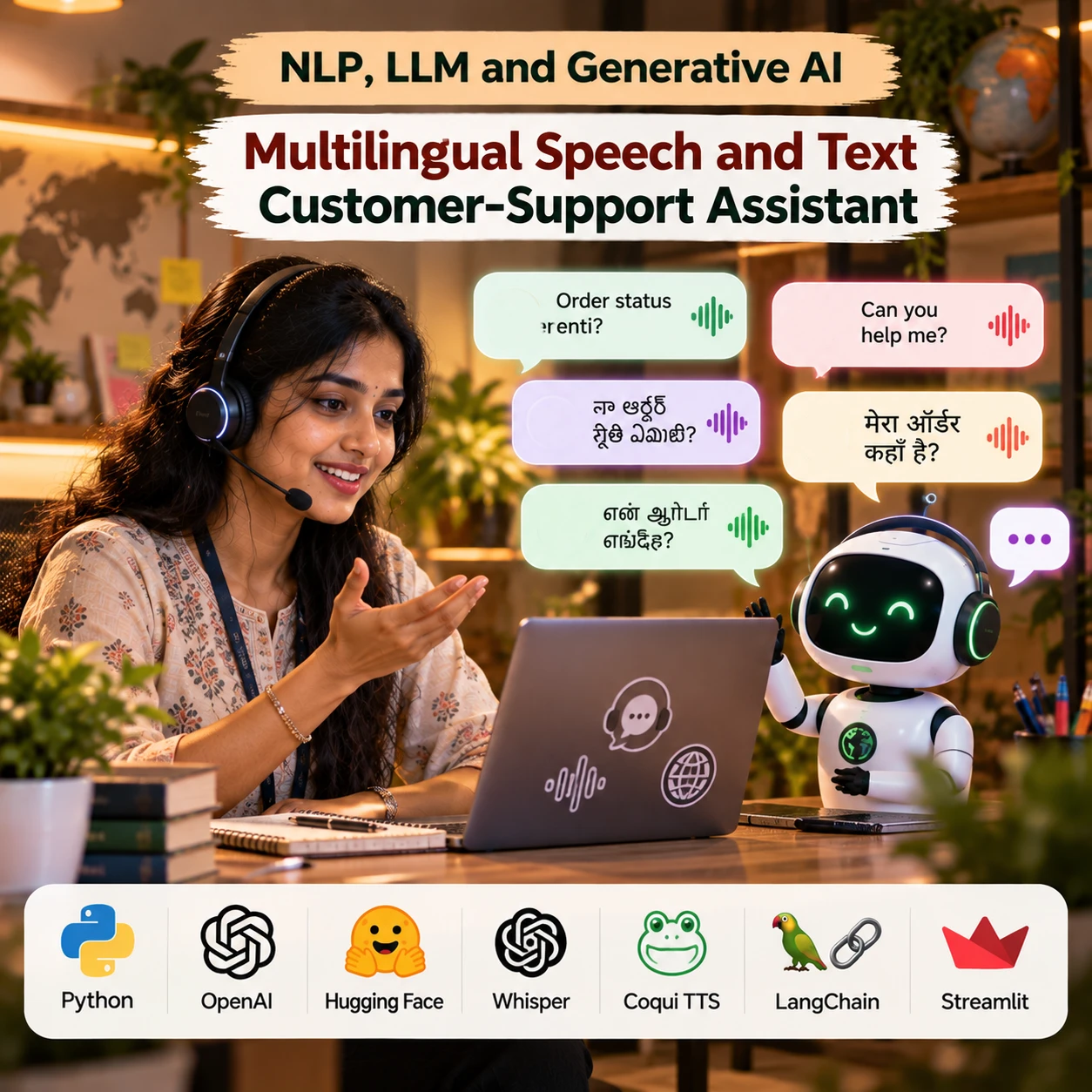
Multilingual Speech and Text Customer-Support Assistant

₹4,999.00

LLM-Based Synthetic Dataset Generation
₹4,999.00 ₹0.00
₹4,999.00
4999